24 August 2008

A plane's history


"Could of been a contenter category" today folks.

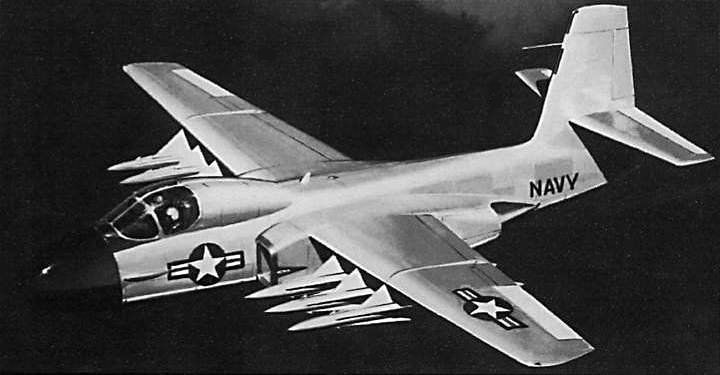
So we are in 1952 and in the middle of the Korean War. One of the primary lessons being learned at the time with the conflict over "MiG Alley" is the need for speed and the ability to maneuver. One of the ways to improve this was by use of the area rule effect, or "Coke Bottle" effect as it was called since the fuselages started to look one of the Coca-Cola bottle that was common in the
vending machines at the time. Grumman realizing that both variants of their F9F airframe the Panther and Cougar couldn't handle themselves against the MiG-15's that the USAF F-86's were flying against at the time. Grumman decided to try and apply the area rule effect to the F9F-8 Cougar as an internal redesign, they labeled it the G-98. However early on during the airframe changes it was realized that a whole new aircraft was going to come out of this. It wasn't just a little nip and tuck. Rather a full scale tear down and rebuild it "6 Million Dollar Man" style.


The aircraft was built around the Curtiss-Wright J65 engine, which itself was a copy of the Armstrong Siddeley Sapphire. This engine is the same that was being used by the British in their Gloster Javelin, Hawker Hunter, and Handley-Page Victor. The aircraft featured a cockpit well forward of the fuselage. It was covered by a rearward sliding bubble canopy. The nose was a small sharp pointed affair that provided good visibility over the nose for the pilot to see during a landing. It was also big enough to accommodate a simple ranging radar as well to give it limited all-weather capability. The wing was manufactured different from most normal construction techniques. The main wing box was milled from light alloys that incorporated integral stiffeners. This was all done to save weight. What does that mean Southern? Well basically think of it this way with your house instead of nailing each piece of dry wall on the internal frame of your house, the builder would take rebar cover it in rebar and then cut it to size to fit your dimensions. One of the more interesting features with this aircraft is that instead of folding up with the wing tips, they folded down.


BuAir was seriously impressed with the design that in April of 1953 they ordered a pair of prototypes. It was initially assigned the designation number by BuAir of XF9F-8, but the Grumman Design G-99 (which was an improved version of the basic F9F Cougar) became the F9F-8 and the G-98 was assigned the designation XF9F-9. Due to problems of engine delivery with the after burning variant of the J-65, Grumman mounted a non-after burning version.


The aircraft took to its first flight with this underpowered engine on July 30th of 1954 with famed Grumman test pilot Corwin "Corky" Meyers at the controls. Even on that first flight with that subpar engine the Tiger showed it had something going right with it. It almost achieved Mach 1 on that first flight. Not three months later in October of 1954 the second prototype took flight. Flight testing progressed was moved out to Edwards AFB just before the holidays. It was out in California that the Tiger was mated with the engine it was designed for and it was the second US Navy fighter (behind the Douglas F4D Skyray) to achieve Mach 1 in level flight. Things were just looking better and better for this Grumman Fighter. During flight testing there was only a few things that turned up about the airframe which were easily solvable. It was in the early half of 1955 that the Navy finally realized that this aircraft was a totally new aircraft completely different from Panther/Cougar family. So they assigned it the next number in line with their scheme, F11F-1, and the name Tiger was carried over from the Grumman designation.

The Navy had this aircraft equipped with four 20mm cannons (since it was found post Korea that the 50 cals just couldn't do it anymore in jet combat), this aircraft was also one of the first Grumman aircraft hardwired from the beginning for the new AAM-N-7 Sidewinder infrared air to air missile. It would be typically armed with Sidewinders or drop tanks on its under wing pylons. Just prior to accepting the aircraft the Navy asked for a few more changes to the airframe from lessons learned during carrier trials. The need for fillets on the wings, which do a better job of control airflow over the wing, were added. As well as adding some additional fuel cells in the vertical tail and around the intakes to increase the range from about 900nm from the carrier to just under 1050nm. The other change asked for was the addition of an inflight refueling probe, going on the standard that all new Navy aircraft will have an inflight refueling system installed. The final change was a six inch extension to the nose to incorporate a new fire control radar system. These new "Long-Nose" Tigers with all these changes started with the second batch of production versions. The initial ten short nose Tigers were issued to between a testing squadron and VA-156 (a day fighter squadron). It wasn't until the end of the year that VA-156 received a full complement of "Long-Nose" Tigers and returned their first few Tigers for overhaul at Bethpage, Ny.


The aircraft enter service with the United States Navy The Tiger unfortunately had a short service life in the United States Navy. There were a number of things the primary reason was that about the same time the F-11F Tiger was entering service the Navy had received from Vought an aircraft design to satisfy a 1952 Naval Fighter contract. This aircraft from Vought was the XF8U-1 Crusader. An airplane which was going to have a famous and absolutely wonderful career with both the United States Navy and United States Marine Corps, but a few other nations in the world. Both the Tiger and Crusader were very capable and comparable aircraft but in the end the Crusader could do it just that much better in some aspects of the performance envelopes. One of the other reasons the F11F was only accepted for a short while is that aircraft was accepted at a time when the Navy was reviewing the role of its fighter aircraft at the time and instead of crossing the beach and mixing it up with enemy aircraft over enemy territory or near the fleet, rather there was a growing need to prevent enemy bombers from delivering nuclear weapons against the fleet. The Tiger was phased out of active duty service in 1961.

Over all the US Navy accepted the Tiger into seven fleet squadrons, VA-156 (later VF-111 in 1959), VF-21, VF-33, VF-24 (later VF-211), VF-51, VF-121, and VF-191. As it was removed from service the aircraft was relegated to being an advanced jet for fighter pilot training and then used as either targets at various ranges around the nation or just taken to the Arizona desert to be stored at the Military Aircraft Storage and Disposition Center on Davis Monthan AFB. Production stopped at Bethpage on the Tiger in 1959 and only 200 airframes were built.


The Tiger is most remembered for two things. The first is not something that you want to be remembered for, which is shooting yourself down with your own weapons. During a gunnery run pilot Tom Attridge was in a shallow dive and fired his four 20mm cannons at targets. Things were going good, however instead of pulling off his target near the bottom of the dive he continued for a few more seconds only to fly through the burst he fire at the initial start of the run this in turn damaged his aircraft sever enough to warrant a crash landing near the target range.


The other thing that most people remember about the Tiger is that was the jet the Blue Angels flew in between the the F9F-8 Cougar and the F-4J Phantom. The Blue Angels flew the Tiger from 1957 to 1969. This jet was the first jet that they had which could go supersonic.


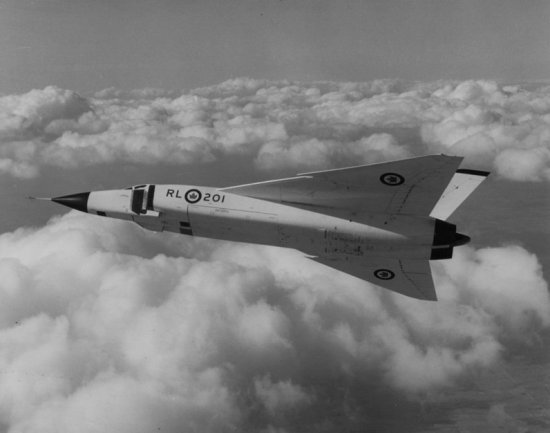
There was an attempt to update the Tiger with a J79 engine in 1956, Grumman called this the F11F-2 Super Tiger. It was able to hit Mach 2.0 at some of the altitude ranges the J65 engine Tiger was having problems in. For reasons lost to history the Navy decided not to buy the Super Tiger. In turn Grumman spent the next two years trying to market the Super Tiger in NATO (to the Luftwaffe, Royal Dutch Air Force, Belgian Air Force, RCAF) to the Japanese Self-Defense Air Force. However due to a number of reasons most of the people that Grumman tried to offer the Super Tiger to decided to go with other fighters.


The final end of the story for the Tiger came in the late 1970's when Grumman brought two F-11A (as the F11F-1's were referred to post 1962 designation standardization) out of the Desert. Cleaned them up and used both of them at Naval Air Test Center Patuxent River to test inflight thrust control systems. One aircraft was modified with the systems under test and the other one was used primarily as the chase plane. This went from 1973 until late 1975 when they were returned to the Desert. These two Tigers were the last to fly.

Labels: ,

|

11 August 2008

An Airplane's History


At the end of the Second World War and just as the Cold War was going through some of its frostiest relations. Both the Soviets and the Western Powers were reviewing their options to fight a new type of war. That is a war with nuclear weapons. It basically boiled down to this in the aviation world:


You built an airplane to be able to deliver a nuclear weapon:


Or you built an aircraft to prevent the first mission:


The United States Navy was in a very interesting position. It had fleet fighters that could attempt to mix it up with tactical aircraft over the fleet. Such aircraft as the F8U Crusader, F3H Demon, F11F Tiger and the recent new comer the F4H-1 Phantom. However as the Office of Naval Intelligence started to see the ways the Soviets would attempt to kill a carrier these fighters didn't look that powerful at all. The ONI looked around and realized that the way the Soviets were going to attempt to kill a carrier was either through attack by the submarines using torpedoes or cruise missiles, surface ships mounting cruise missiles, or by long range bombers such as the Tu-16 Badger or Tu-95 Bear armed with large cruise missiles such as the AS-4 Kitchen or AS-5 Kelt to deliver either a large warhead or nuclear warhead against a carrier battle group. The planing and intention folks in ONI took a look around at the aircraft and then realized the current generation of fighters just didn't have the range nor the staying power to stay on station as far as possible from the battle group ready to intercept a massive bomber formation coming from the Kola or Crimea Peninsulas.

What was needed was an airplane mounting a large radar that was capable to see a far way out from the plane, the ability to carry a butt ton of gas to hang around at the long reaches from the battle group, and finally it was going to be armed with a long range powerful missile. So BuAir submitted the official request for an interceptor that had to have a good loiter time, a very good intercept radar system (to the point that it could do the search and intercept on its own with out assistance), and be capable of possibly carrying one of two planned missiles the AIM-47 Falcon or the AAM-N-10 Eagle.

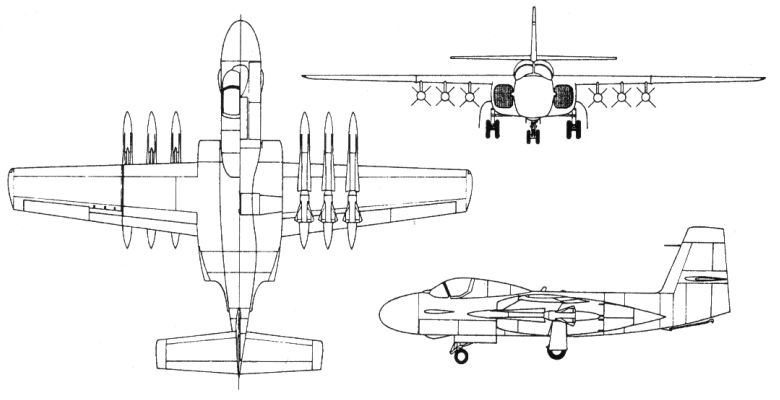
The Douglas Aircraft Company submitted a design to compete in this bid. It was a straight wing monoplane, with a large bubble canopy designed to sit two aircrew side by side and a third in a special radar compartment near the rear, its was going to mount a radar dish that was about five feet across in a large bulbous nose, finally it was going to be subsonic. Navy officials looking at the drawings commented that it basically appeared to be the F3D Skyknight just grown bigger.


Douglas won the competition in 1959 and began to further design the aircraft. It was going to be powered by Pratt and Whitney TF30-P-2 engines and be armed with the Grumman Aerospace company AAM-N-10 Eagle missiles. A series of other things came into being at this time as well to make this planned weapon system look very good together. Grumman just won the contract to build the follow on to the WF-1 Tracer, the W2F-1 Hawkeye which was going to be capable of data linking radar information between itself and the carrier battle group along with selected interceptors. The other thing that was coming on line though very slowly was the new Navy Tactical Data System, or NTDS, this was a series of computers built around a UNIVAC computer system which was going to receive all the radar data from the battle group in a specific data link and present it back out to the various Combat Information Centers, CICs. That way the battle group commander and his various warfare commanders could gain a better handle on what was all going on around them. The advantage the F6D was going to have is that its radar system the Hughes APQ-81 tied in with the APS-125 of the W2F, that way the Hawkeye could successfully guide the Missiler to the right steering an line up for a missile shot even before the bad guys knew there was anyone else out there. On top of that if the F6D was on its own as it relayed its own radar data back to the W2F or the Carrier the air defense officer could have a better view of what was going on around the battle group.

As it was when the F6D Missiler was announced there was strong resistance from the fighter community with inside the US Navy. The idea of just being a launching platform for the Eagle just didn't sit well with some of these fighter pilots. On top of that the tactics being expressed just didn't seem to make sense at the time either. Questions about was a carrier air wing going to give up a fighter squadron to be equipped with this long range all-weather interceptor. What would of happened when the Missiler shots its load of Eagles at an incoming bomber stream? Just pull out of the way and wait for the carnage to end in the hope that the next set of defense lines could properly defend the battle group? What about about the need to cross the beach in support of a strike package? Obviously this airplane couldn't mix it up with the light weight tactical fighters (such as the MiG-17 and MiG-19) the Soviets were using. In the end BuAir decided to put a hold on this aircraft in 1961. Overall it was an interesting though and a different challenge to the defense of the carrier battle group from an bomber/cruise missile attack. At various times through out both the Kennedy and Johnson administrations the idea of the Eagle and Missiler were dusted off only to be finally killed in 1967 as some of the lessons learned from the Have Doughnut and Have Drill exercises at Nellis testing ranges, along with the huge costs of both developing the radar set, missile system and airframe were approaching costs that at the time the national defense budget couldn't afford.

Not all was lost though. A number of ideas from the F6D Missiler were retained for usage in the next fighter project being developed for the United States Navy. This project was the Tactical Fighter Experimental or TFX program. It was going to mount a radar system that though not as large as the APQ-81 it was going to try and be as powerful, this radar system was going to be the AWG-9, also the lessons learned from the development of both the AIM-47 Falcon and the AAM-N-10 Eagle were combined to create the AIM-54 Phoenix missile. Finally with the further refinement of the aerial refueling store and conversion of selected aircraft into dedicated tankers the idea of having a six hour loiter time was lowered and instead the tactic of "Chainsaw" was begun to be developed. Chainsaw was where everything that wasn't a fighter or AEW aircraft was uploaded with a buddy store. Then during an incoming Soviet bomber regiment raid a group of fighters and a tanker would be launched. The tanker (or aircraft with the buddy store) would fly with the fighters then top the fighters off as they would start to run dry. The tanking aircraft would turn and run home, get gas and fly back out to join up with their assigned charges fly even further out to get as far as possible from the battle group. At which the AEW aircraft would begin to assign a pair of Fleet Defense Interceptors to let loose with their missiles, finally closing range to get as many as possible with the on board gun system. Until the penetration of the battle group SAM belt was achieved.

Labels: ,

|

17 July 2008

A plane's history


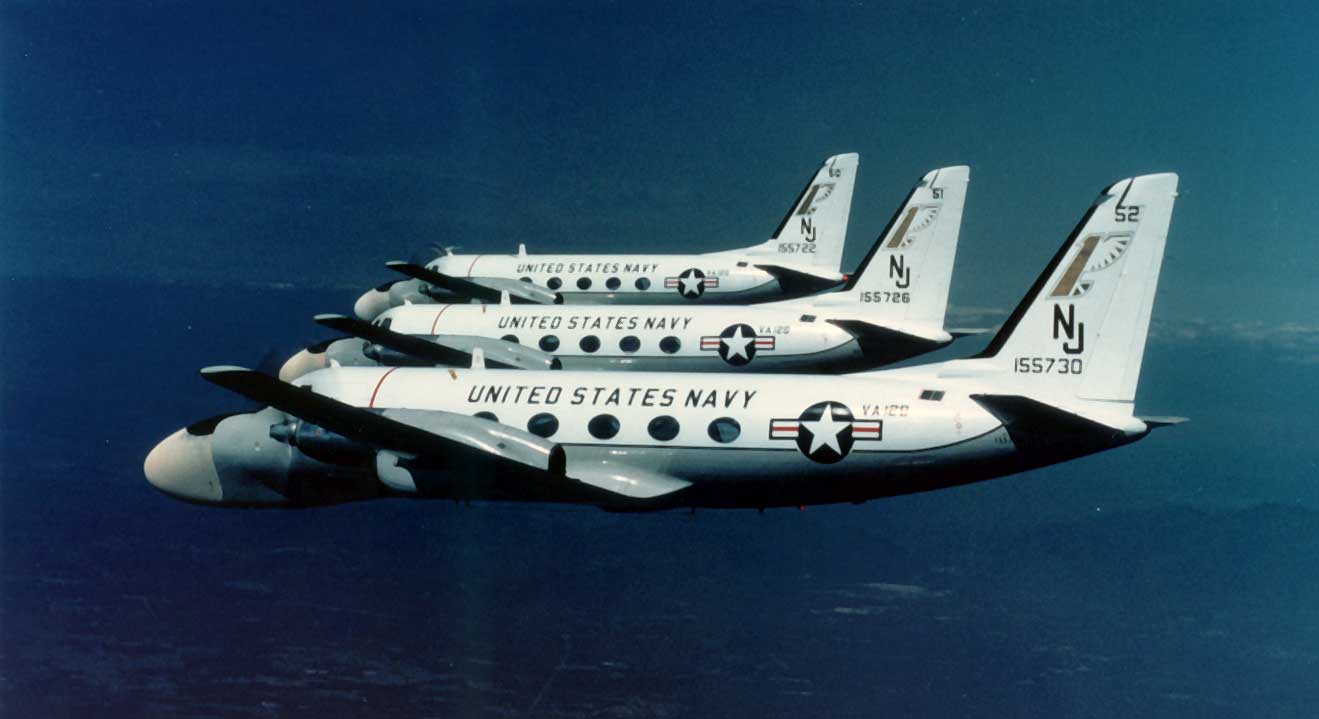
As the US Navy made the transition from using seat of the pants flying and dropping bombs based on best guess of the pilots. When the A-1 Skyraider was being phased out being replaced by the A-6 Intruder it was realized that the Navy needed a dedicated trainer which was slow enough and had enough space to basically re-create the cockpit so that both pilots and Bombardiers/Navigators could train together. Looking around both the Navy and Grumman realized that the executive transport which Grumman was selling only a few years before looked pretty good. It was already being used by the military as a basic VIP transport with the US Air Force and US Coast Guard. This aircraft was the Grumman Gulfstream I or C-4 Academy (as it was known in the military). So Grumman took a number of these aircraft and grafted on the nose of an A-6 Intruder. The cockpit was changed around to reflect the cockpit set up in the A-6 Intruder. The rest of the cabin had a jump seat for an instructor then a few other seats for aircrew followed up with a couple of setups only for the B/N's. One of the other things that was done was that nearly all the same electronics that the A-6 had installed into it. So the same radar, radios, ECM, etc. The only thing this thing couldn't do was actually drop bombs. After being accepted in Navy usage it was referred to as the TC-4C Academy or more commonly along the flight lines at Whidbey and Oceana as the "Tic-4". The TC-4C saw the most usage of the aircraft were used as an introduction to instrumentation of the A-6 and then it was used as trainer for instrumentation flight training. It was also used to get teams of pilots and B/N's trained to learn how to operate as a team or as it is known now it is called crew resource management. With the introduction of dual crew attack jets, the team concept was stressed very much.


All of these aircraft were assigned to the three RAGs, VA-128 Golden Intruders(West coast), VA-42 Green Pawns(East Coast), and VMAT(AW)-202 Double Eagles. As the A-6 was phased out of active Navy inventory the TC-4C was removed and most of them are sitting out in in the Bone yard in Davis-Monthan Air Force Base in Arizona.


Labels: ,

|

A video from the RN 800 Squadron

A quick break for right now. I am up to my eyeballs with some jobs at work that are driving me nuts trying to get them together.

Anyhow here is a video from the RN's 800 squadron of some Harrier Ops off the HMS Illustrious. Enjoy.

Labels:

|

02 October 2007

Last warshot torpedo dropped

I enjoy to read a number of different blogs from around the net. One of my favorites to stop by over a cup of tea at the end of work is SteelJaw Scribe. He posts a number of different and interesting stories about his time in E-2's as an Carrier Airborne Early Warning dude. Talks about aviation history and comments about world military-politico events. One of his most recent posts was talking about a wonderful attack aircraft built by Douglas Aircraft Company. That aircraft he talks about is the AD-1 Skyraider, an aircraft designed by Ed Heinemann. This is a man who also developed the A-3 Skywarrior, SBD Dauntless, A-4 Skyhawk, A-20 Havoc, F3D Skyknight, F4D Skyray, A-26 Invader. All of these aircraft had successful and famous careers in their own times.

After reading, well actually watching his post about the Skyraider it got me to think about its history and a sea story that I heard about when I was a kid, from a few family friends that flew A-6's but had previously flown A-1 Skyraiders when they were just brand new LTJG's coming from Pensacola. That story was of the last use of aerial torpedoes in actual combat and the last airplane to dropped in the US Navy. To tell this story we need to head in the wayback machine with Mr. Peabody and Sherman. We get transported back to Spring of 1951.
The war in Korea has been running for about a year. Following the breakout from the Inchon landings and the following fight from out of the Chosin Reservoir. UN Forces had to retreat south of the 38th Parallel after the intervention of People's Liberation Army "Volunteers". From there the war started to stabilize into trench warfare again and the gains that were being made was for little bits of ground before the armistice was signed. It was learned from 8th Army Headquarters (which was the major army headquarters in Korea) that the North Koreans and Chinese were using a dam that controlled the Hwachon Reservoir and in turn the Han River. The would at times raise or lower the river levels so that attempts to bridge the river that separates a good portion of South Korea from the North, would fail. So the 8th Army ordered an attack against the dam. First up was a massive B-29 raid that even employed some early use of radio-guided munitions. All that happened to a dam built by the Japanese during the time they had Korea as a colony, was some of the reinforced concrete was chipped and a couple cracks were made into the upper facade. The call next went to the US Navy. Commander Carrier Task Force 77, RADM Ralph A. Ofstie passed the order off his newest carrier on station for a line period.

That carrier was the USS Princeton and her air wing CVG-19 composed of VF-191 (F9F-2 Panthers), VF-192 (F4U-5 Corsairs), VF-193 (F4U-4 Corsairs), VA-195 (AD-4 Skyraiders), VC-35 (AD-4N Skyraiders). While the CAG and his squadron skippers were reviewing target. After the crews thought about it the idea was brought up to use Tiny Tim rockets and 2000lb bombs. It was thought that precision dive bombing would get the primary target which was the sluice gates. The strike was flown and results were not pretty. The rockets bounced off the reinforced concrete that the dam was composed of and the precision dive bombing that delivered the 2000lb bombs only chipped the paint. So that night as everyone was sitting around the officer mess table debating how to do this when the commanding officer of the Princeton, Captain William O. Gallery, suggested that maybe some of the torpedoes that the Princeton had on loaded at Puget Sound Naval Base prior to start of the cruise.

The torpedoes that they had on loaded were improved versions that the torpedo squadrons had used through out World War 2, the Mark XIII (Mk13). This was the torpedo that squadrons such as VT-2, VT-3, VT-6, VT-8 had tried to use during the Battle of Midway. It was going to take a whole day to prepare torpedoes since they were buried near the bottom of the magazines.

A review of the aircrew in the Skyraider squadrons found out that only four pilots besides LCDR Carlson and the Captain Gallery had any experience with torpedoes. Three pilots were part of VC-35 and one was a lowly Ensign fresh from school to VA-195. So a quick and dirty classroom time was established and it was determined that 8 pilots from VA-195 and VC-35 were going to make the drops the next day. So tactics were reviewed and the mechanics were explained in how to make a torpedo drop.

It was also realized that to help the torpedoes not dive deeply that some sort of device was going to be need. So the Aviation Ordnancemen placed plywood tails and plywood nose cones on the torpedo. These were going to help it stay shallow and not detonate against the bottom on the initial drop. This was before the use of parachute packs like we use now for aerial torpedoes.

The next morning the brief was accomplished the aircrew grabbed breakfast and head out to their planes for a 0900 launch. They arrived over the target area around 1130 and found it strangely quiet.

It was realized that due to how narrow the valley was that only two planes at a time could make the run. So that is what happened at just inches above the ways four times a pair of Skyraiders made the run down the valley. They had to go very low and very slow to make sure the torpedo didn't break up on the drop. All the while being shot at. One can only guess that it looked just like the final scene in "Star Wars" when Luke Skywalker is making the run to put a torpedo into the Death Star. With all the concentration about the attack run and all the anti-aircraft fire going off around them.
All the while some F4U's of VF-192 flew strikes against the air defense sites and VF-191 flew top cover in their F9F's.
Out of the 8 pilots that dropped a torpedo that day it was ruled that 6 actually got hits, two torpedoes suffered damage to their gyros and swerved into each other and blew each other up before the dam. Out of the 6 that hit the dam, one actually blew open a sluice gate and the other 5 heavily damaged the others that they were later the be found unusable when UN ground troops recaptured the area later that summer.
VA-195 would forever carry the nickname from that simple operation, The Dambusters. They would continue to fly the Skyraider up until 1960 when they would transition over to the A-4 Skyhawk and later on to the A-7 Corsair II. They are still an active duty squadron flying F-18 Hornet and currently forward deployed onboard the USS Kitty Hawk with CVW-5 out of NAF Atsugi.
VC-35 was established in May of 1950 as a night attack squadron. They would serve with proud tradition through out the Korean War. The primarily flew the AD-4N, which was an AD-4 with an enlisted radar operator stuffed in the tail of the plane looking for night targets and via an ICS system would tell the pilot where to fly to and when to drop his weapons. Besides this one mission in the daylight most of the time was spent getting launched at dusk and recovering just as the sun was coming up. They would go out and bomb rail lines, bridges, major roads, and in general just not give the enemy any satisfaction that night time would cover his operations. VC-35 would later become VA(AW)-35. This designated them as an all-weather attack squadron, the designate came a year after the war in Korea ended and with the introduction of a new plane the AD-5N. VA(AW)-35 would continue to make deployments to the WestPac until they 1959 when they would stand down and re-stand up as VA-122 as the FRS for Skyraiders and later on for A-7's the squadron would finally be dis-established in 1991 as the A-7 was retired. VA-122 was recently stood back up as the FRS for the F-18E/F-18F Super Hornets on the West Coast.
VF-191 Satan's Kittens would fly F9F's, F-8 Crusaders, F-4 Phantoms and then the F-14A before being decommissioned in 1991.
VF-192 The Golden Dragons would fly the F4U for another year before making the transition themselves to the F9F. They would then go from the Panther to the Cougar (F9F-6) over to the Fury (FJ-4B) and make the transition to the A-4 Skyhawk in 1960. VF-192 would be re-designated as VA-192 during the transition to the North American Aviation FJ-4B Fury. They would retain this title as they flew the A-4 Skyhawk and then the A-7 Corsair over North Vietnam and in 1986 make the transition to the F-18 Hornet. Since 1986 they have been forward deployed to NAF Atsugi at attached to CVW-5.

Labels: ,

|

07 September 2007

Flight Deck Friday done Southern Air Pirate's way

I happen to read on a vacation the great book "Bridges of Toko-Ri" by James A. Michener. It is a great book about a Naval Air Reservist who was recalled to active duty when the Korean War started, a CWO helicopter pilot who is a little wild and eccentric, an enlisted rescue swimmer who is fresh off the farm and afraid of officers and the chiefs, finally there is an admiral who realizes what sort of fight the Korean War is. The book was written from Michener's experiences amongst the Naval Aviators of CTF 77. He wrote a series of articles for the Saturday Evening Post about being with these fine folks. He then fictionalized the telling of a real raid against a series of bridges near the Korean and Chinese border. Publishing the book and it was turned into a great movie with William Holden and Grace Kelly. The biggest difference between the book and movie is the plane that is flown by the hero Brubaker. The movie had the Grumman F9F Panther and the book he flew the F2H Banshee. That second plane is an aircraft built by the McDonnell aircraft company. It was an enlarged version of their first jet fighter for the US Navy the FH Phantom.
The McDonnell learned a number of things from their first jet fighter. The biggest thing was to have a more powerful engine to do anything safely behind the carrier. They also learned that to be a successful fighter a more powerful weapon then just the Browning .50cal machine gun was needed as well. So in 1947 before the ink was dry the production lines in St. Louis, Missouri were making the conversion from the production of the FH Phantom over to producing the new jet fighter for the US Navy the F2H Banshee.
The initial production version of the Banshee, officially designated the F2H-1 was powered by a pair of Westinghouse J34-WE-22's, she was armed with four 20mm cannons in the nose. Delivery of the first Banshees went to VF-171 out of NAS Cecil Field, FL in 1949. This date was also important because it was also during the "Admirals Revolt", that one of the VF-171 pilots pulled off an interesting intercept. The revolt of the admirals was the debate about whether the country should spend money on carriers or on big bombers. One of the big debates that the brand new USAF had about their super bomber the B-36 was that it flew so high that it couldn't be intercepted. So one sunny Florida day a VF-171 pilot was able to push his fighter up to along side one of these B-36's up near the 45k altitude band. Even better he was able to maintain control of his plane and supposedly took pictures of the intercept. This totally blew away the idea that the B-36 was invulnerable to enemy fighters. It was also with the easy way that the plane could be flow that the other nick name "Banjo" was assigned during the initial operation of the F2H-1.

With the speed of developments the Navy realized that the F2H-1 was a good plane but they wanted what every user wants of their planes longer ranges and heavier payloads. This lead to the development and production of the F2H-2. This version of the fighter became the big player in some little war over in Asia called Korea.

The F2H-2 had an improved version of the J34 installed that gave her an extra 500 pounds of thrust. Along with receiving plumbing to carry two 200gal wing tip tanks, and wing mounts to mount up to six 5in HVAR rockets on the wings, along with receiving fuselage mounts that could carry up to two 500lb bombs. She also received a fuselage plug to receive larger fuselage fuel tanks. The first production version of the F2H-2 being delivered to the fleet in December of 1949. From the basic model the Navy asked for three different versions. The Banjo was used to do everything from fly strikes against ground targets, fly Combat Air Patrol over Carrier Task Force 77, Fly escort for photo recon birds or strike groups, fly suppression of enemy air defense missions. It served with distinction along side the Grumman F9F Panthers ,Vought F4U-5 Corsairs, and Douglas AD Skyraiders above the Korean air space. Only once was the F2H was sent against "MiG Alley" that was in 1951 and even though contact wasn't made with any MiG-15's. The mission wasn't repeated.
The first was the F2H-2P version. This was the photo recon version. In place of the guns it mounted a series of cameras in its enlarged nose. This flew most of the USN and USMC battlefield photo recon missions through out the early parts of the Korean War. The USMC were the primary users of the F2H-2P with VMJ-1. The aircraft was so fast and could fly so high that it could evade most of the optical and move faster then the communist radar control AAA guns could operate. It became so valuable that even the USAF was willing to accept that it was an important aircraft and on missions up near the Yalu. They tasked F-86's to protect the Banshee from the MiG-15.

The other two versions of the F2H-2 was the F2H-2B version and the F2H-2N version. The Bravo Banjo was the nuclear delivery variant. It had the fuselage mounts strength to handle the some of the early tactical nuclear weapons. On top of that it also had installed some of the early low altitude bombing system (AKA as LABS) equipment installed. LABS enable the pilot to preform a nuclear deliver profile that basically tossed the bomb near the target and hopefully would allow the plane to escape the blast. The "N" version of the Banjo was the night fighter version. The F2H-2N mounted an APS-19 ranging radar installed in a larger nose so that this early aerial intercept radar could be mounted.
The F2H-2 was removed from active duty service in 1952 and replaced by an bigger and better version of the Banjo, this was the F2H-3 version.
The F2H-3 in its basic form mounted an APQ-41 aerial intercept radar that gave not only range and bearing but also limited altitude information to the pilot. This version became the standard all-weather fighter on US Carrier Decks through out the 50's and into the early 60's. It could carry up to four 500lb bombs or two AAM-N-7 Sidewinder when that missile was introduced in the late 50's.
The final version of the venerable Banjo was the F2H-4 this was an all-weather version as well it mounted the APG-37 radar produced by Hughes. It was with this version that also saw the introduction of the in-flight refueling probe
Now the only thing that limited the range of the Banjo in its mission was human endurance. The F2H-3 and -4 served along side each other from their introductions until 1959 in active duty service and 1964 in USNR service.
It was with the F2H-3 and F2H-4 that squadrons such as VC-3 and VC-4 along with some of the VX squadrons started to more and more experimentation in night flying and night time operations. According to the book "Dark Sky, Black Sea: Aircraft Carrier Night and All-Weather Operations" by Charles Brown, some of the detachment OIC's and squadron CO's started to force not only the commander of the air groups, but also the admirals to test tactics and operations. These started to write the books that those of us in modern carrier operations take for granted. Some of the lessons these men learned were written in blood. One of the more interesting stories involving the Banjo was this one that I read in Dark Sky. According to LCDR Bob Lyon:


Flying in the Med atmosphere was usually in a "milk bowl" - that is, so hazy that one sees no horizon, no water, no sky. For reason unknown, three of us were launched one night as a division. .... Bennington advised us to stay aloft [and conserve fuel] until a foul deck was cleared. Later we were ordered down for landing. Having descended, we were ordered to orbit in vicinity of the ship because the foul deck had not been cleared as anticipated. .... A flight of AD [SAP-Douglas Skyraiders] were milling about, having also been directed to orbit in vicinity of the ship. At low altitude our division skimmed beneath cloud cover as fuel reserves dwindled. The AD flight passed dangerously close under us in a near-miss. When we finally got back in the ready room, I asked Otis Inge, "How Much
Fuel did you land with ?" Otis [replied,] "The aircraft ran out of fuel before I could park it."

A situation like that today though rarer still happens. But everyone involved from the CATCC folks up to the Air Boss work to make sure it never happens.


One of the more interesting adventures the Banjo went on was its only export customer. The Royal Canadian Naval Air Forces. Yes, Virginia once before the kindly neighbor to the north of the US had an aircraft carrier and it decided in the 1954 to replace their older Sea Furies with McDonnell F2H-3's. So the Canadian government spent $25million to buy 39 recently retired F2H-3 to populate their carrier's deck. The HMCS Bonaventure, had VF-870 and VF-871 had plenty of fun flying the Banjo off their carriers deck and proved to some of the more timid US Naval Aviators that even though the Bonnie's 704ft flight deck was shorted then the average Essex class carrier deck by about 100ft it could be done. However, old age and not enough money being spent on defense lead to the F2H from being removed after a high attrition rate. After that the HMCS Bonaventure flew only Grumman S2F's and Sikorsky H-3's on the anti-submarine mission.


The F2H served a little longer then its stable mate the Grumman F9F Panther. It helped to fight off the communist hordes in Korea, it was one of the first single seat all-weather fighters, it was a joy to fly, it helped to write the books on night and all-weather operations. The F2H Banshee or Banjo was an a joy and probably one of my favorite naval jet fighters from the 50's.

Labels: ,

|

22 August 2007

An Airplane's History

One of the big missions for the US Navy post World War 2 was the delievery of nuclear weapons. For a while the US Air Force had a monoply on this mission for the better part of five to six years. The US Navy had a few aborted attempts before the introduction of an airplane that would spend the next 4o years in the service of the United States doing either its primary mission or a few additional missions that was added on to the aircraft later on in its life. What was this aircraft? It was the A-3 Skywarrior designed and built by the Douglas Aircraft Corporation. It was designed by the famous Ed Heinemann. The Skywarrior's mission was to fly off the deck of an US Navy aircraft carrier and delivery a nuclear weapon against an important theater or strategic target. The plane carried a crew of three and could lift up to 12,000 bombs up to a range of 1325 miles. The only down side was the aircraft was built before the introduction of ejection seats. So one of the nicknames the plane earned related to its designation of A3D was jokingly called All Three Dead. The plane was pretty heavy and was flown off both the modern super carriers of the USS Forrestall class but also a pair or more were fitted able to fly off the older World War 2 Essex class aircraft carriers as well. The A-3A and improved model A-3B were onboard US Navy Aircraft carriers during the Suez Crisis, Tawian Crisis, Lebanon Crisis, and the Hungary Revoultion. There was a few squadrons that tried to use the A-3B over North Vietnam against some of the harden targets such as the infamous Dragon's Jaw Bridge or Thanh Hoa Bridge. The lost rate was pretty high at it was reasoned not to risk the Skywarriors over Vietnam in the bomber role.

The plane was replaced by the North American Aviation A-5 Vigilante in the early 60's. With the advent of a successful ballistic missile in 1960 for use on a submarine, the US Navy moved out of the stratgetic bomber role by 1964. However, it still retained the A-3 Skywarrior as a bomber in both the nuclear and conventional role. The aircraft was also modified to be both an electronic reconnasice aircraft and to be a photo recon aircraft. Such as the example to the left. As the picture on the left shows it could carry a number of cameras and with its great speed out run most of the fighters at the time. One of the more interesting items with the RA-3B Skywarrior is that it use to carry flash bombs that were incredabile bright. There were stories of these recon birds dropping these flash bombs at night and some ground observing reporting that the plane had blown up in the air. It was retired from the photo recon role with the introduction of the RA-5C.


Yet another mission assigned to this aircraft was the in-flight refueling mission and the aircraft was redesignated from A-3 to KA-3B. Here a hose and drogue unit was attached to the plane via an airstreamed fairing. There were plenty of stories through out the Vietnam conflict where the KA-3B crews might take themselves and thier tanker tracks closer to the feet wet points to help those aircraft that were damaged make it home or at least make the swim that much shorter.


One of the other mission and the mission that the aircraft would have from the time it quit trying to deliver a nuclear weapon till it was retired shortly after Desert Storm ended was as an electronic bird. It was either an electronic intelligence bird or as an electronic countermeasures bird. It served in this role from early 60's till 1992. This plane flew through out the Cold War and up thorugh its end preforming in front line service in one way or another.
The Skywarrior is still flying too. After a number of them were retired by the US Navy, Raytheon bought about 8 or 9 of them and are using them as flying test beds for new electronic systems or as range instrumentation birds during tests. I have seen one or two flying when I have gone down to NAS Point Mugu, CA for a missile shot with my squadron. Amazing that a plane introduced in the late 50's is still flying today.
If you want to see some more information about the this aircraft please go and check out this link here, A-3 Skywarrior Association.


Digging around I found a couple of videos shot of Skywarrior in action with either VQ-1 out of Guam or VQ-2 out of Rota Spain. You all might enjoy watching them as well.


Labels: ,

|

15 June 2007

If I could afford to gas it and maintain it.

Deep thought for the day.

If I had the money to buy it, fuel it, and to maintain. Is a Grumman J2F Duck. I just think it would be cool to have at the local flying club on base. Then if I had a good weekend, hop in it with my fishing gear and find some secluded spot in one of the bay, coves, or lake. Spend the day fishing while sitting on the wing or in the radio operators station. Then when I have had enough, start the engine up again and come on home.


The Grumman J2F Duck is a further expansion of a design that Leroy Grumman borrowed from a former employer, Loeing Aircraft Co. It was so successful that it originally came into active service in the early 30's and served in a variety of locations and with either the US Navy or the US Coast Guard from 1931 until 1945.

It is a pretty easy aircraft from the maintaince side of the house. Just a rotary engine, hand cracked landing gear, cables and pulleys of the flight controls. In the cockpit there are some pretty simple gauges. A wet compass, a engine speed and temp guage, attitude indicators, then there is just a simple UHF radio that would be capable of doing radio direction finding. UHF radios aren't that hard to fix.
Like I said if I had the money for it. I would use it to go fishing or hunting in those hard spots to get to in other ways. I just think it would be a fun plane to play with where I am at right now.

Labels:

|

24 May 2007

For Every Flight Hour.....

One of the bloggers that I love to read every so often is Neptunus Lex. He is an ex-F18 jockey, Top Gun student, Top Gun instructor, and XO of a carrier. Now he is living the life of luxury in San Dog, trying to finish off a masters in something that is way above my head. One of his the subjects he blogs about every so often is something he calls "Plane p0rn". An example of which is here.
I will admit that I love airplanes too, but also hate them. Simply because I am now in the business of maintaining them. So for every flight hour some one like Lex, Jake Grafton, Harry Brubaker, "Spig" Wead, Buzz Sawyer, and Steve Canyon are up there living the dream. There is someone turning wrenches well into the early dawn trying to give them the best airplane out there. Whether that is a Sopwith Camel, Boeing F4B, Douglas SBD Dauntless, Douglas A-1 Skyraider, Mcdonnell F2H Banshee, Grumman A-6 Intruder, Grumman EA-6B Prowler, or even the MacAir F-18 Hornet. Why do we do it? Well beyond the job, for some of us there is some job satisfaction to see an airplane you poured sweat, blood, curse words, angry punches, and tears into leave the pointy end of a carrier deck. Then an hour and forty-five minutes later it comes back home over the broad end. The aircrew get out, come down to maintenance and tell the maintainer that the plane was 5.0 and the only gripe was the relief tube was too short or the seat cushion might need to be washed. So here are some shots that I have gathered over my life time or taken myself of those framers, tweaks, light bulb changers, stitch bitch, mech, or line rat doing thier part to ready an airplane for the next day's dawn patrol, close air support, combat air patrol, tanker package, or early warning mission.


Oh and bonus points to those of you old enough to know who Jake Grafton, Harry Brubaker, Steve Canyon, Buzz Sawyer, and "Spig" Wead are. Also I know that it is now Boeing F-18, but I am old and remember when Boeing made bombers and the F-18 was a MacAir product.

Labels: ,

|